




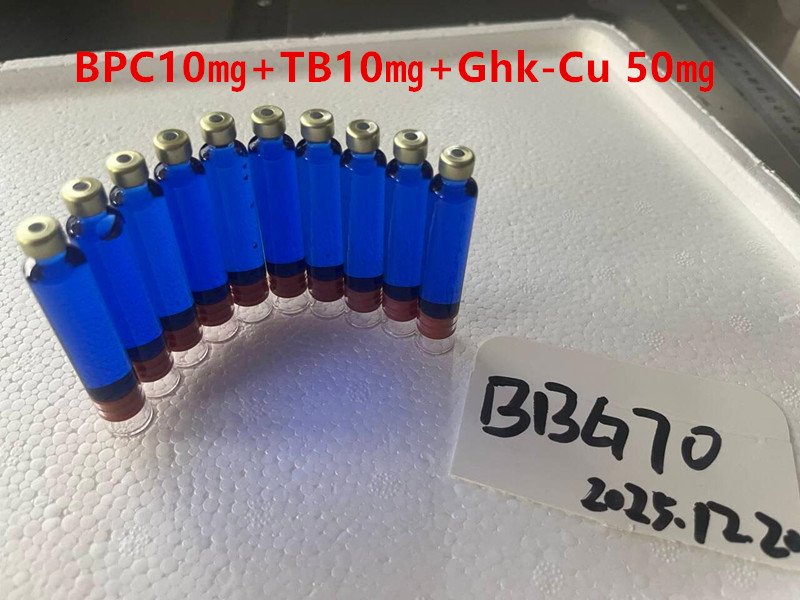
GLOW is a research peptide blend combining GHK-Cu, TB-500 (Thymosin Beta-4 fragment), and BPC-157 in one 70 mg vial. Each component has been studied for its regenerative and healing properties across various tissues. By delivering all three in one formulation, GLOW aims to synergistically promote tissue repair, inflammation reduction, and wound healing beyond what each peptide might achieve alone.
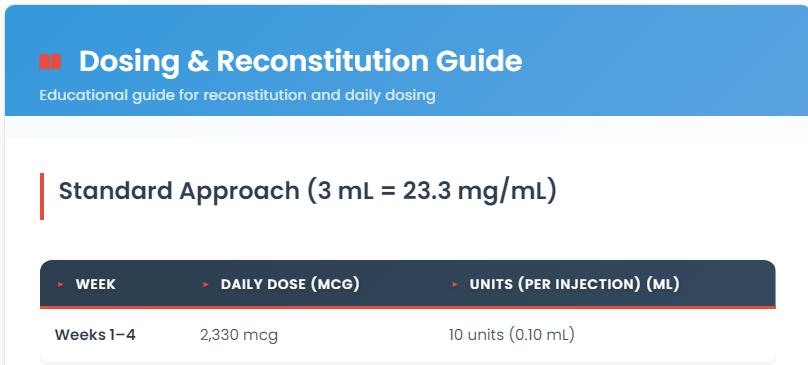
- Reconstitute: Add 3.0 mL bacteriostatic water → ~23.3 mg/mL concentration.
- Typical daily dose: 2,330 mcg (2.33 mg) once daily for 4 weeks.
- Easy measuring: At 23.3 mg/mL, 1 unit = 0.01 mL ≈ 233 mcg on a U-100 insulin syringe.
- Storage: Lyophilized: freeze at −20 °C (−4 °F); after reconstitution, refrigerate at 2–8 °C (35.6–46.4 °F); use within 4 weeks.
-
Reconstitution Steps
- Draw 3.0 mL bacteriostatic water with a sterile syringe.
- Inject slowly down the vial wall to minimize foaming.
- Gently swirl or roll the vial until fully dissolved (do not shake vigorously).
- Label with reconstitution date and refrigerate at 2–8 °C (35.6–46.4 °F), protected from light.
- Use within 4 weeks for optimal potency and safety
Storage Instructions
Proper storage preserves peptide stability and potency.
- Lyophilized: Store at −20 °C (−4 °F) or below for long-term stability (months to over a year)[8]. If freezer unavailable, refrigeration at 2–8 °C (35.6–46.4 °F) is acceptable for shorter durations (weeks). Store in sealed container with desiccant if possible to prevent moisture absorption.
- Reconstituted: Refrigerate at 2–8 °C (35.6–46.4 °F) at all times when not in use[8]. Do not freeze reconstituted solution. Use within 4 weeks (28 days) for optimal potency and safety[8]. Discard any unused solution after this period.
- Allow frozen vials to reach room temperature before opening to prevent condensation.
- Protect reconstituted solution from light (store in amber vial or wrap in foil).
- Inspect solution before each use; discard if discolored, cloudy, or contains precipitate.
Injection Technique
Subcutaneous injection guidance based on clinical best practices.
- Clean the vial stopper and injection site with separate alcohol swabs; allow both to air-dry completely.
- Using an insulin syringe (typically 29–31 gauge, 5/16 to 1/2 inch needle), draw up the calculated dose (10 units = 0.1 mL).
- Select a site with adequate subcutaneous tissue (common sites include lower abdomen, thigh, or upper arm).
- Pinch a fold of skin; insert the needle at approximately a 45° angle into the fatty subcutaneous tissue. With short insulin needles, a 90° angle can also be used if injecting into a pinched skin fold.
- Inject slowly over 2–3 seconds; do not aspirate for subcutaneous injections.
- Withdraw needle and apply gentle pressure with a clean cotton swab; do not rub the injection site.
- Rotate sites systematically with each injection, maintaining at least 1–2 inches spacing between sites to prevent tissue irritation.
- Dispose of used syringes and needles immediately in a proper sharps container; never reuse needles.
Post time: Jan-13-2026