




What is AOD-9604 and How Does It Work Without Affecting Appetite?
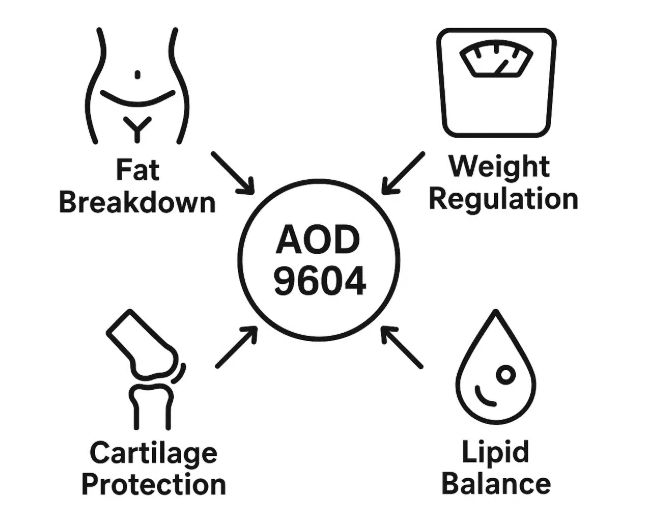
AOD-9604 is a synthetic peptide fragment (amino acids 176-191 of human growth hormone) that stimulates fat breakdown through beta-3 adrenergic receptors in adipose tissue, working peripherally on fat cells rather than centrally on hunger signals. Here’s what makes it appetite-neutral:
- Mechanism: Activates lipolysis via beta-3 adrenergic receptors in fat tissue
- Appetite Impact: No effect on hunger, satiety, or food intake patterns
- Cortisol: Does not elevate cortisol levels (unlike full growth hormone)
- Administration: Subcutaneous injection, typically daily
- Typical Dosing: 250-500 mcg daily before breakfast
- Metabolic Effects: Increases fat oxidation without affecting insulin or glucose
- Best For: Individuals seeking fat loss while maintaining normal eating patterns
- Key Difference: Works directly on fat tissue, not through appetite regulation
AOD-9604 DOSING PROTOCOLS FOR FAT LOSS
Optimal dosing of AOD-9604 has been informed by both clinical trial data and ongoing research into the peptide’s pharmacokinetics and fat metabolism effects. The peptide has a very short plasma half-life of approximately 3 minutes, which influences dosing frequency and timing considerations.
Standard AOD-9604 Dosing Protocol
Typical Dosing Range:
- Standard Dose: 250-500 mcg per day
- Clinical Trial Dose: 1 mg (1,000 mcg) per day (most effective in studies)
- Conservative Start: 250 mcg per day for first week
- Maintenance Range: 500 mcg per day for sustained protocols
Frequency: Once daily, typically before breakfast
Timing Rationale: Morning fasted state maximizes fat oxidation potential
Cycle Length: 12-24 weeks for body composition protocols
Administration Route: Subcutaneous injection (abdomen, thigh, or upper arm)
Reconstitution: Bacteriostatic water, standard peptide protocols
ADMINISTRATION GUIDE
AOD-9604 is administered via subcutaneous injection, the same method used for insulin and many other peptide therapies. Proper reconstitution and injection technique ensure optimal peptide stability and absorption.
Reconstitution Instructions
AOD-9604 is typically supplied as lyophilized (freeze-dried) powder in vials containing 5 mg of peptide. Reconstitution requires bacteriostatic water (water containing 0.9% benzyl alcohol as a preservative):
Standard Reconstitution: Add 2 mL of bacteriostatic water to a 5 mg vial, creating a concentration of 2.5 mg/mL (2,500 mcg/mL). At this concentration, a 500 mcg dose equals 0.2 mL (20 units on an insulin syringe).
To reconstitute, inject the bacteriostatic water slowly down the inside wall of the vial rather than directly onto the powder. Gently swirl (do not shake vigorously) until the powder is fully dissolved. The solution should be clear and colorless. Any cloudiness or particles indicate degradation and the vial should not be used.
Injection Technique
Subcutaneous injection involves depositing the solution into the fatty tissue layer between skin and muscle. Common injection sites include the abdomen (avoiding the area immediately around the navel), anterior thigh, or upper arm. Rotating injection sites prevents lipohypertrophy (fat tissue buildup) at frequently used locations.
Use an insulin syringe (typically 0.5 mL or 1 mL capacity with a 29-31 gauge needle). Clean the injection site with alcohol, pinch the skin to create a fold of tissue, insert the needle at a 45-90 degree angle, inject slowly, and withdraw the needle. Apply gentle pressure with a clean gauze if needed but do not massage the area.
Storage Requirements
Unreconstituted lyophilized AOD-9604 should be stored at 2-8°C (refrigerated) and protected from light. Under these conditions, the peptide remains stable for extended periods (typically 12-24 months from manufacture date).
Once reconstituted with bacteriostatic water, the solution should be refrigerated and used within 28 days. The peptide degrades more rapidly at room temperature, so minimize time outside refrigeration. For travel, use insulated containers with ice packs to maintain cool temperatures.
Never freeze reconstituted peptide solutions, as the freeze-thaw cycle can damage the peptide structure. Similarly, avoid exposing vials to excessive heat or direct sunlight.
Important Safety Information
Do not use AOD-9604 if you:
- Have a known hypersensitivity to growth hormone fragments or any component of the formulation
- Have active malignancy (cancer that is currently being treated or monitored)
- Are pregnant or breastfeeding (insufficient safety data)
- Have a history of severe allergic reactions to peptide therapies
Common side effects (typically mild and transient): Headache, mild gastrointestinal disturbances (flatulence, mild diarrhea at higher doses), upper respiratory tract symptoms, injection site reactions (redness, mild discomfort)
Seek medical attention if you experience: Signs of allergic reaction (hives, difficulty breathing, swelling of face or throat), persistent gastrointestinal symptoms, unexplained significant changes in energy, mood, or physical symptoms
Post time: Apr-16-2026